
THE TRIANGLE, REVISITED
Notes from another world

When I posted the final chapter of My Brain Death (part one), I intended to bring the reader up to date on my experiences since 14th January 2021. I had - still have - a lot to say about medicine, strokes, disability, mental health and indeed the world in general. I have yet to find a format with which to do this, not for want of trying. Progress is messy and hard to talk about without a set narrative. When you’re out in the wild the headlines are often mixed in with things that have nothing directly concerned with brain death, but that condition inevitably impinges on nearly everything you experience. Life, in short, has become blurred; it is not like in the hospital where you have one discrete project to accomplish.
There have recently been a lot of changes in my life. New kiné, new doctors, change of treatments. I have never quite given up hope of at least a partial recovery, and now I have a slight glimmer at the end of the cave. Is My Brain Resurrection not far off? More on this soon.
In the meantime, this is a text I started over ten years ago.
Before my burnout (1/11/19). Before my stroke (2/11/20). Actually before Brexit, Covid, or Trump 1 or 2. Thus reading it back feels like, at times, exhuming William of Malmesbury, but I can still feel some slight continuity between that medieval scribe and my modern disabled guy, so I would like to share some of it with you.
INTRODUCING THE TRIANGLE I am the happy inhabitant of an extremely small European Triangle. It’s European, because it’s in Europe. The lingering Brit in me. The apexes of the Triangle are my son’s infant school, which is immediately behind my own school and place of work; the shops at the end of the street where I live; and the main town square. This is my regular pathway, which I carry out on foot. Occasionally it descends for a week or so into a more or less straight line between the schools and the shops, which my house more or less bisects, and even my arrivals in the town square serve only to decant me straight back whence I have come, like a tram’s turning circle.
I do describe a slightly larger triangle on a more or less weekly basis, using a car. On this occasion, the apexes of the triangle are my house; the municipal dump, which is situated in a modern business park on the other side of the railway; and a large supermarket/shopping complex to the west, next to the motorway. In between these last two is the tennis club.
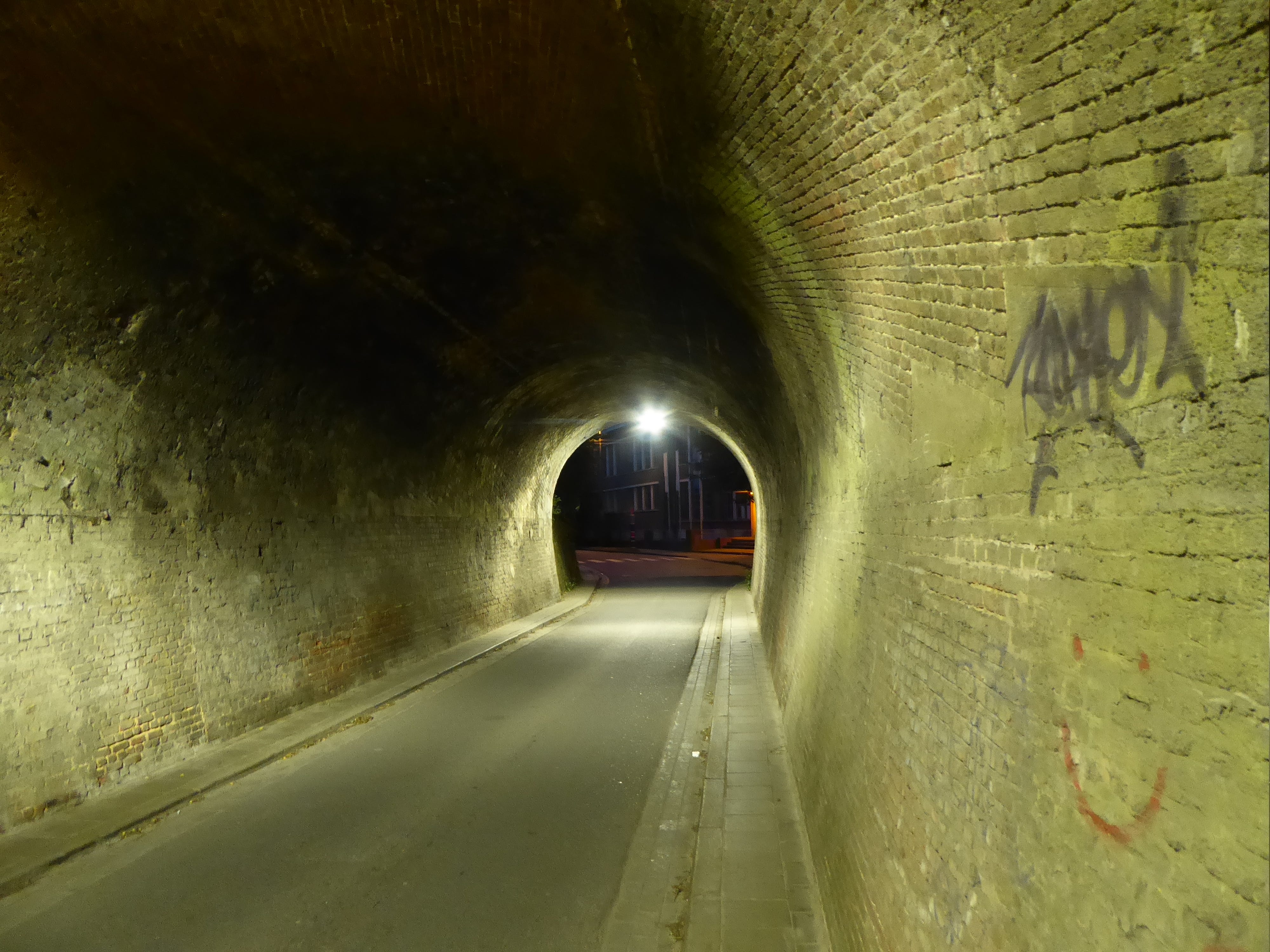
Both these triangles are contained within a hole in the landscape, for thus is situated my town. It is as if some superconcentrated, black hole-like energy force were situated somewhere in the tunnel which conducts the town’s hidden and forgotten river on its clandestine course. To begin with, I lived in the capital city of the country and commuted out to the suburban town to work; but the lure of the latter, the work, the reason for living, became too great. Gravity pulled me in and here I stay. Intermittent successful sorties are almost always occasioned by others: only they can give me the pull or the push to reach escape velocity.
Near the north apex of the Triangle, on a hill, stands the imposing façade of the school in which I have taught for now over double the amount of time I have taught anywhere else. I have always quickly been institutionalised in the schools I have worked in: if I am not, I feel alienated and unhappy. For someone who professes to despise soap opera, I quickly become part of one.
On leaving my house, it takes three minutes forty seconds to reach the front door of the school at a reasonably brisk pace. Nevertheless I do feel the separation and I am sometimes surprised by the different moods the building evokes in the different seasons and times of day. Schools are best empty. I like the lights seen in the classrooms from outside, in the growing darkness, at the end of day. I like the Saturday morning in May when I open up for an exam at about half seven, and I am briefly alone in this dusty, shabby, perfect world.
Therein, I exercise professional relationships with colleagues with whom I have virtually nothing in common except our mutual charges. Our mutual charges seem to almost universally love me, a fact which simultaneously disturbs me and keeps me going. Yes, keeps me going, as if I were some kind of clockwork teenage projection, powered by a sort of collective psychic karma spring. It adds to the fear that, at the end of it all, I will simply cease to exist – an experience which for some is exactly what happens. Wound down
.
INTRODUCING THE INHABITANTS OF THE TRIANGLE An Edwardian castle-style front entrance hides a concrete jail with glass eyes on towers. That’s not my school, that’s the nearby prison. Its date of construction mirrors almost precisely that of the school, but unlike the school it had new bits glued on in the 1990s. It is 18% overcrowded, which is probably another similarity. It’s a high-security prison, with high-profile criminals, in the middle of a populous town. On a Sunday afternoon, the bellowing voices of the incarcerated and hopeless are to be heard over a wide area. Escapes included one through a door which was left open.
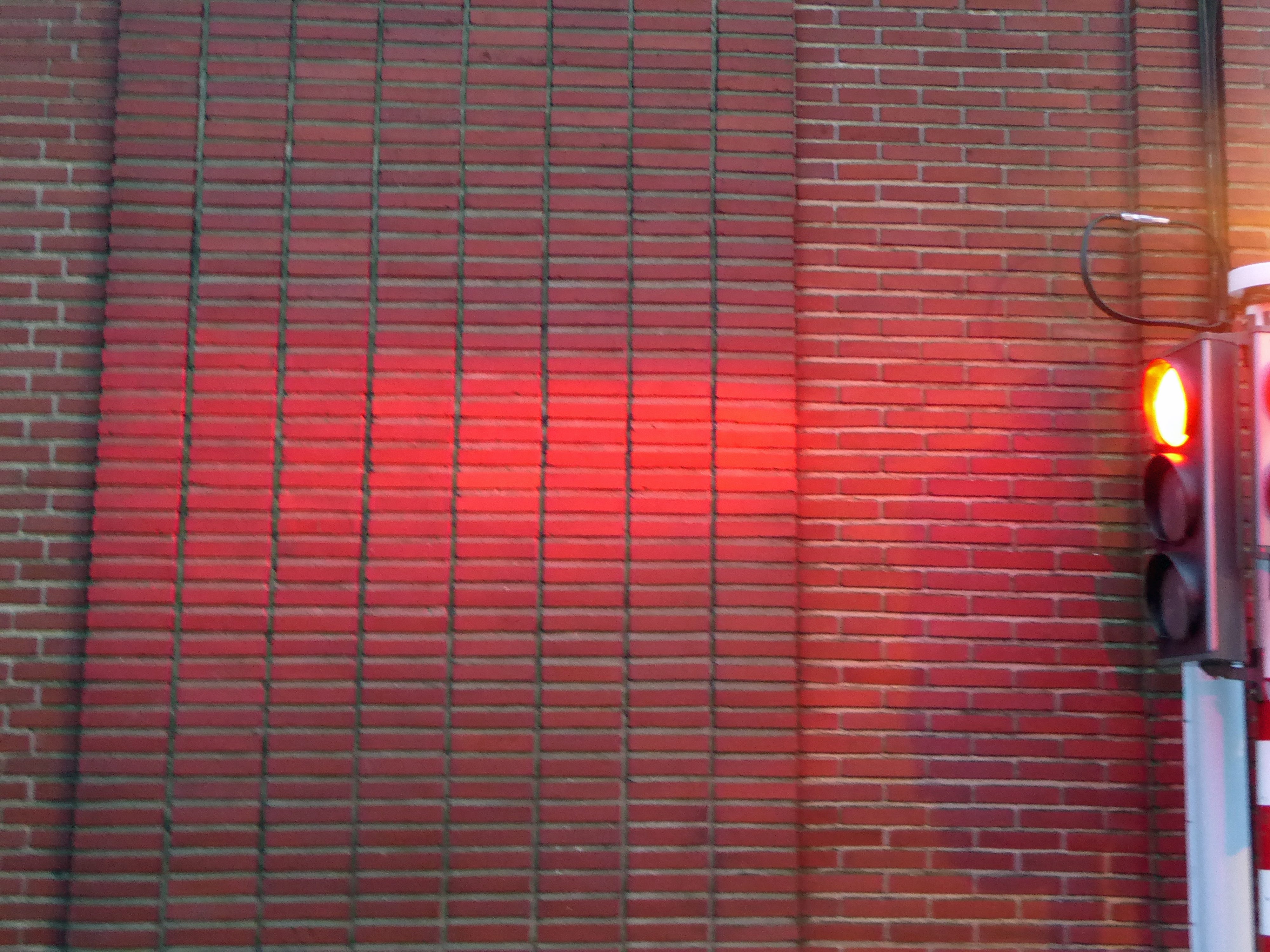
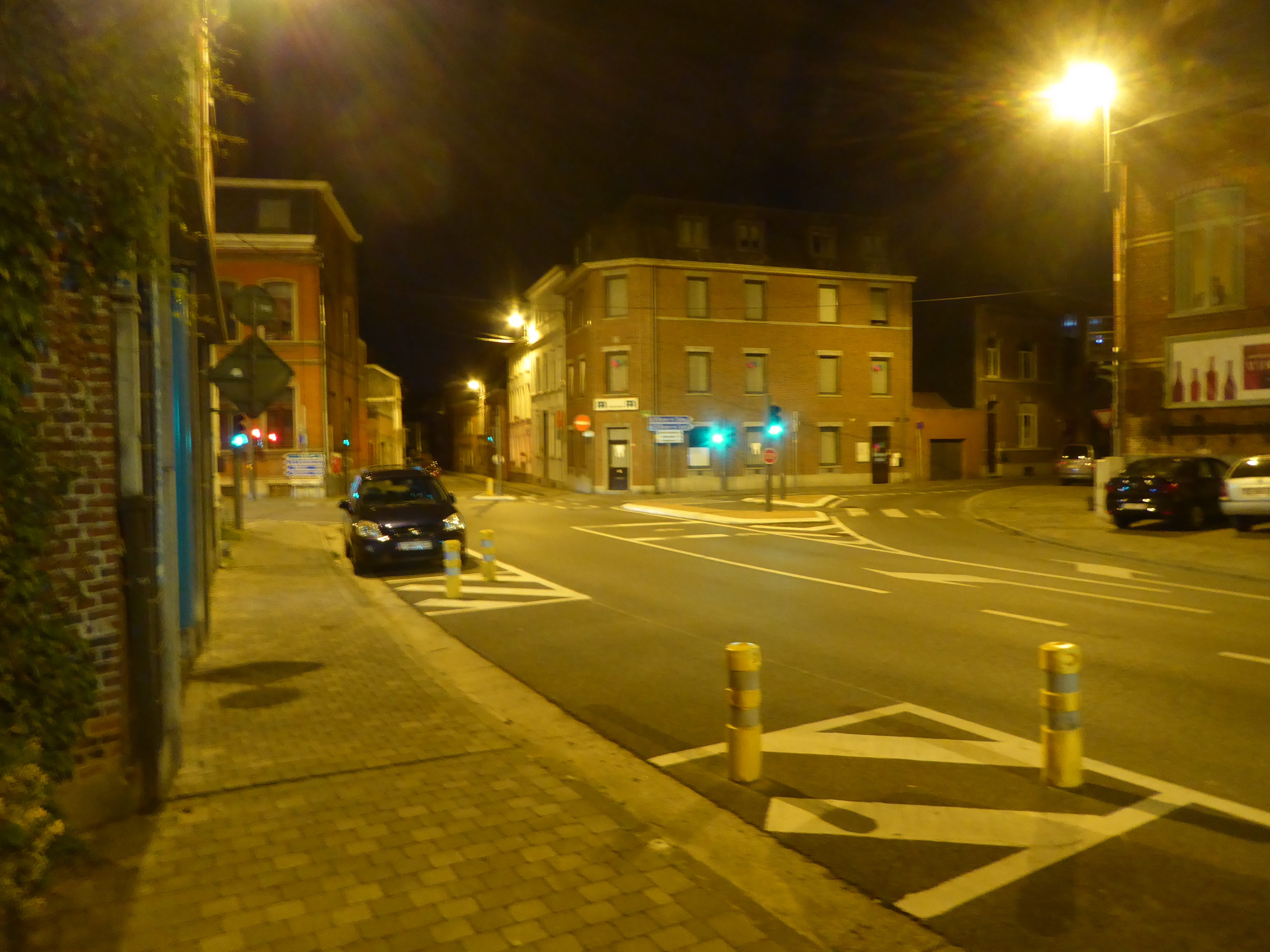
At the road junction a minute from my house, traffic squeezes in and out of the town between tall houses and narrow pavement. A set of traffic lights regulates flow from the hill which joins it at right angles – the hill which descends past my school. The front door of the house which looks directly up the hill across the junction is often half-open: a man, age not obvious but presumably retired, stands, half-in, half-out. He wears a top that could be a shirt but could equally be from a pair of pyjamas, indeterminate trousers, slippers. Slightly moustachioed, largely bald, he watches the traffic, he watches passers-by with his head turned slightly to one side. Half in and half out of his front door. The casual observer would assume from his expression that he was looking for someone expected at any moment: visitors, the postman. But no: he watches, almost unmoving in body and expression, fumes from the traffic, fumes from a cigarette. From time to time, lorries that will hardly fit between the houses, let alone around the junction, come down the hill towards him, misled by their satellite navigation systems. He faces them up, daring them. When the danger has passed, he goes back to watching.
Somewhere at the top of the hill lives an elderly lady. It is hard to believe that anybody could be so old, and yet so vital. Tiny, white of hair and of skin, with the standard old lady long blue coat, she limps profoundly. She has lively, but bloodshot, hen’s eyes. Every step must be an effort, it seems, and her body does not permit her to stand up straight. Every morning she walks down the hill about eight o’clock, when both the road and pedestrian traffic are at their height, sometimes pausing to talk to people, sometimes for a rest.
Her progress is slow. Sometimes I have passed her near the top of the hill, deposited my son in the nursery, and hurried back home, passing her a hundred metres or so from where I had first seen her. For a long time I wondered where on earth she went. Then one morning I had to buy cleaning products early in the nearest supermarket, and there she was. But she does not always go there: I have also seen her heading west into the town centre, her painful gait the most recognisable thing in the town. Affirming her life, making herself leave the house, seeing her public, she is as much a star as anyone could reasonably hope to be. And all who see her must think each day if they will see her again.
Another inhabitant of the Triangle (at least I suppose she is) is a woman who says hello to everyone. Absolutely everyone. And that is pretty much all she says. A small woman, sixty something, perhaps, bent over, always in characteristic dark green jacket, long black skirt; for a long time almost completely bald apart from a pigtail, but now her hair seems to be growing back on top, as if after a bout of alopecia. I have never seen her anywhere but in the supermarkets, hanging out in the warmth and the light and saying hello to every customer, the exhausted cashiers pressed into social work as they so often are. In the past she used to have a trolley, in which she assembled collections of goods such as the kind of dog food sold in shrink wrapped plastic tubes, though I never know if she actually bought anything, and I have never seen her with a dog. But then I have never seen her outside a supermarket.
Now she just comes to watch, it seems, and interact, if that is the right word. Like people who watch lorries at their door; like, I suppose, teenagers who hang out in car parks. The last time I saw her she was also apologising copiously for having moved the chairs in the supermarket’s little lobby area. This was obviously the end of a long session: a slightly over-smiling man was hovering, car key in hand, ready to take her away (where?); the cashier leapt from her till to rearrange the chairs so as to say, it’s ok, you can go now.
I’m sure that mental illness will become more common in the future. As we lean more and more heavily on our brains, the grey matter will crack, much as our bones or our lungs or hearts used to do in the days of manual labour. It will follow madness’s movement to the real fringe, away from people who were simply socially somewhat deviant, away from Victorian women who were incarcerated for refusing contemporary norms. And, as we all live under that mental cosh, we accordingly have less and less energy to expend upon people from the fringes. Everybody probably wants to know the old lady’s story, for the grace of God, but they’re not going to ask, because they’ve got to get home, cook the dinner, get the children to bed, clean the house, write a report for tomorrow and go to bed early, healthy wealthy and wise. In any case, once asked, they would probably hear it again tomorrow.
Best then not to cope with her, not to look. Though she keeps saying hello, she becomes slowly transparent, like the beggars who occasionally dot the supermarket door. Solidarity is a word much on good citizens’ lips around here, and there is indeed more of it than whence I came, but slowly the cold wind of the future has followed my footsteps to whistle through the new concrete arch that separates the supermarket from its car park.
I have a very clear memory of the guy watching from his doorstep as well. Always lovely to read your writing!